My story
What could I say that would change anything
I wrote the book I needed, and then went looking for everyone else who needed it. This is how that happened, and what I am actually arguing.
Beginnings
Aman Lyimo
I am a Tanzanian philosophy graduate and a seminarian of the Archdiocese of Dar es Salaam. School started at Maua Primary School in Kilimanjaro, finished in 2011, then O-Level at Ifati Secondary School in Moshi in 2015 and A-Level at the Salesian Seminary in Dodoma in 2018. I began philosophy at Mwendakulima National Major Seminary from 2020 to 2022, and in 2025 I earned my Bachelor’s Degree in Philosophy from Urbaniana University, through Jordan University College in Morogoro. I am now preparing to commence my theological studies there.
I live and write in Dar es Salaam, in Kiswahili and English, as two separate books, not one book moving between the two. Each is written whole in its own language. A reader should get the argument entire in the language they actually think in, and not a translation of somebody else’s.
The argument itself is simple, and I will not let it go. Everyone already has a philosophy. Almost nobody chose theirs. It arrived from the family, from the school, from whatever the crowd was saying that year, and it runs quietly in the background deciding how the money is handled, how the work is treated, how the hard seasons are survived. When it is a bad one, the life goes badly and the person never traces it back.
Kila mwanadamu anahitaji falsafa njema ya kumuwezesha kuishi kwenye ulimwengu huu geugeu.
So I wrote twenty-one of them down. Not definitions, philosophical insights you can pick up and carry. Each chapter traces an idea to its root, anchors it to a thinker who lived it well enough to prove it, sets it against the confusion we are actually in right now, and then answers the only question that matters: what should be done now?
I am direct about the pressure on young Tanzanians, because pretending otherwise helps nobody. The betting. The gambling. The overnight miracles. The deal that promises to double your money if you stop asking questions. I do not moralise about any of it. I blame the shape of the thing: people are fighting, but the system rejects them, and then I argue for a philosophy of work and money that can survive contact with it. Chapter twelve is the practical one. Chapter twenty is the one that says none of it works alone.
Bishop Bernadin Mfumbusa reviewed the manuscript and pushed the thinking through, particularly chapter eight, on vision. I say this plainly because it is plainly true: Without him, and his help reviewing and passing through my ideas, I would not have written my book. He died in 2026. I reached for an old proverb and admitted I had nothing. Niseme nini ili iwe nini: what could I say that would change anything.
Since the launch I have carried the book into bookshops, parishes and school halls, and I keep going schools to sit with the students, talk through what is actually frightening them and encourage them to keep going. That is the part I would keep if I had to give up the rest.
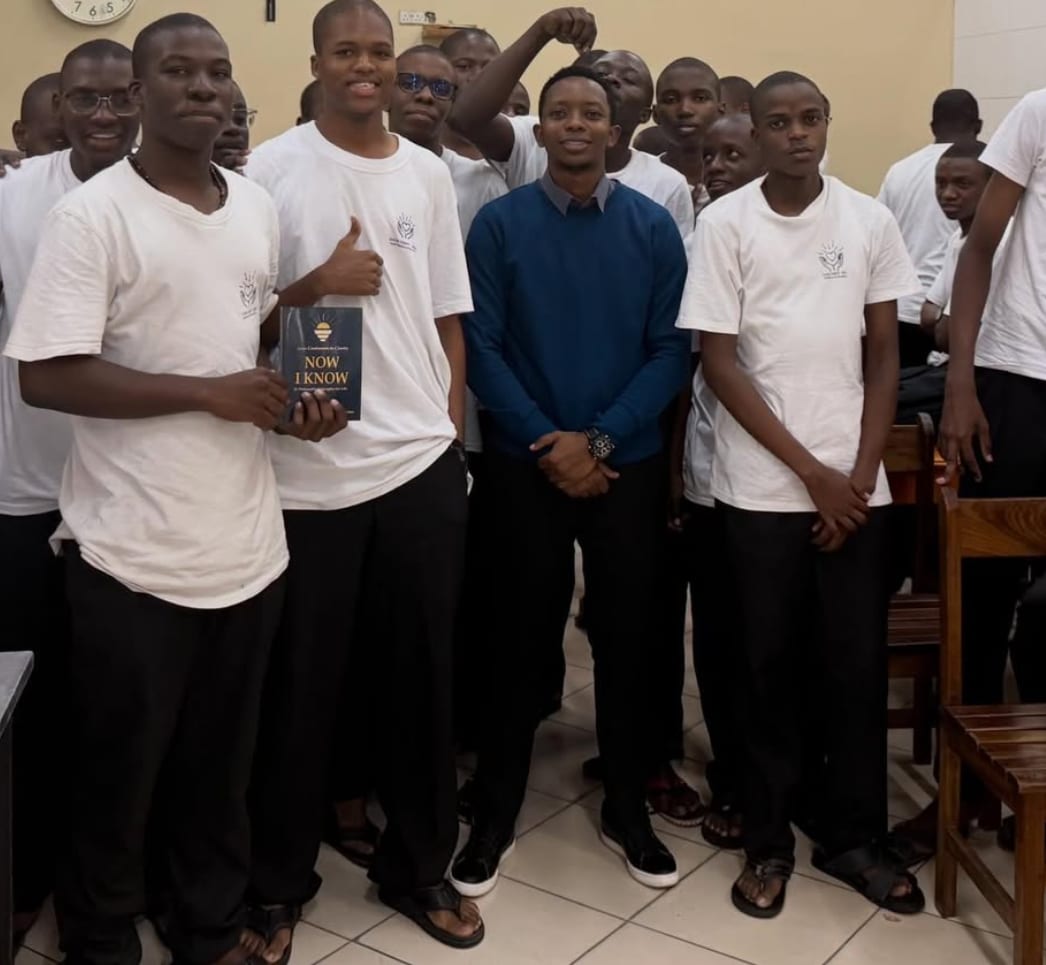
Marian Boys, the week before the examinations. This is the part I would keep if I had to give up the rest.
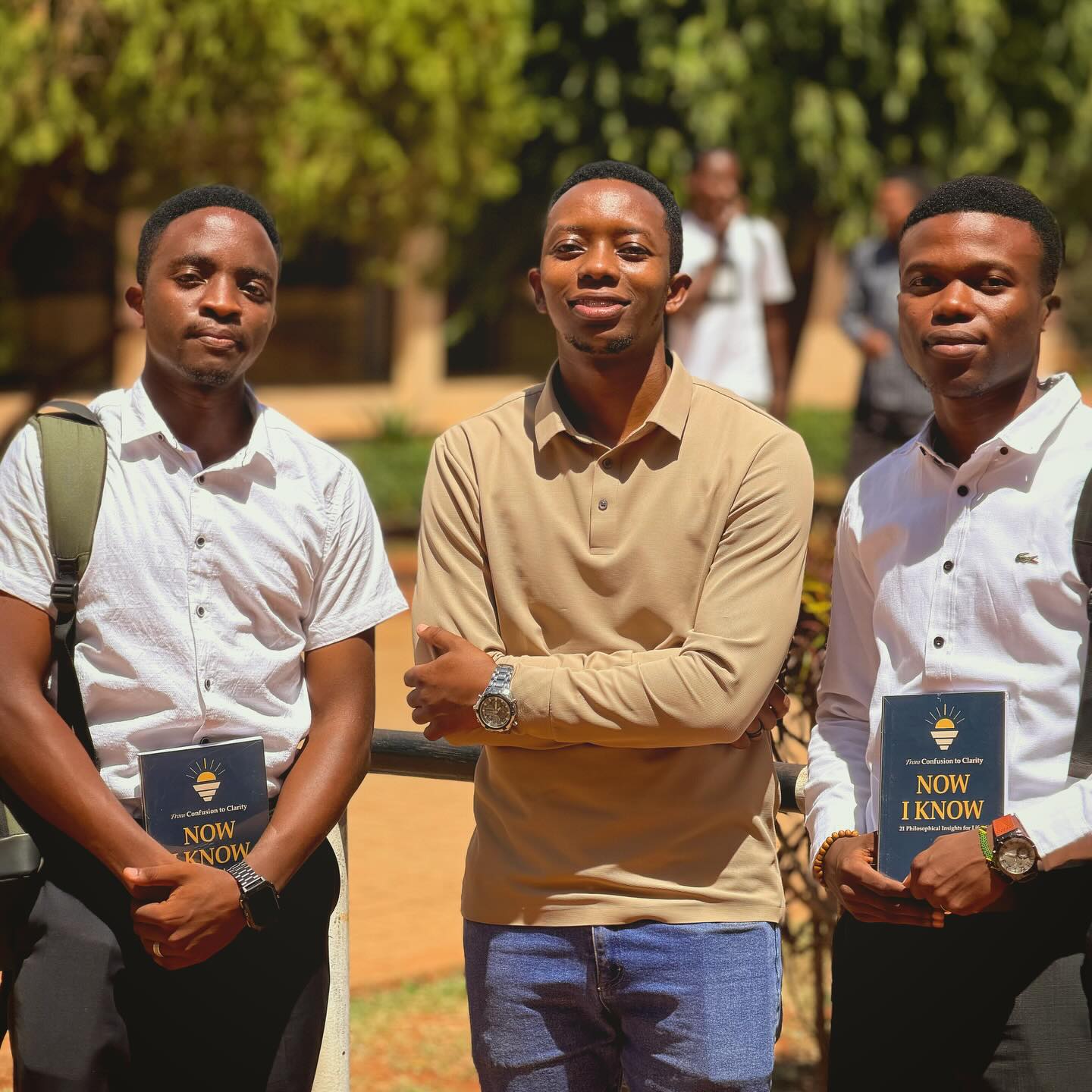
Readers with their copies. This is the whole point of it.
In my own words
- God's Own
- Author of Now I Know
- Life Long Learner
- Fearless Dreamer
- Supported & Supportive
- Unapologetically Me
What the book is arguing
Everyone is already running on a philosophy. Most people never chose theirs. It came from the family, the school, the crowd, and it quietly runs the whole life.
Tengeneza falsafa yako, usiishi za watu
Timeline
How it happened
Everything here traces to something I posted myself, or to the back cover of the book. Where a date is approximate it says so.
- 2011
2011
Where the schooling starts
Maua Primary School, Kilimanjaro
The academic journey begins at Maua Primary School in Kilimanjaro, completed in 2011. Nothing about philosophy yet, just the ordinary Tanzanian classroom the rest of it is built on.
2011
- 2015
2015
O-Level, in Moshi
Ifati Secondary School, Moshi
Ordinary Level at Ifati Secondary School in Moshi, finished in 2015.
2015
- 2018
2018
A-Level, at the seminary in Dodoma
Salesian Seminary, Dodoma
Advanced Level at the Salesian Seminary in Dodoma, finished in 2018. The seminary is the turn the rest of the life follows.
2018
- 2020
2020
Philosophy proper
Mwendakulima National Major Seminary
Two years of philosophy at Mwendakulima National Major Seminary. This is where the subject stops being a school subject and starts being the thing I argue with.
2020 to 2022
- 2024
2024
The manuscript, and a mentor
Bishop Bernadin Mfumbusa reviews the manuscript and passes through the ideas. I am unambiguous about what that was worth: without him, the book does not get written. Chapter eight, on vision, is the one I credit to him directly.
Before 2025 · approximate
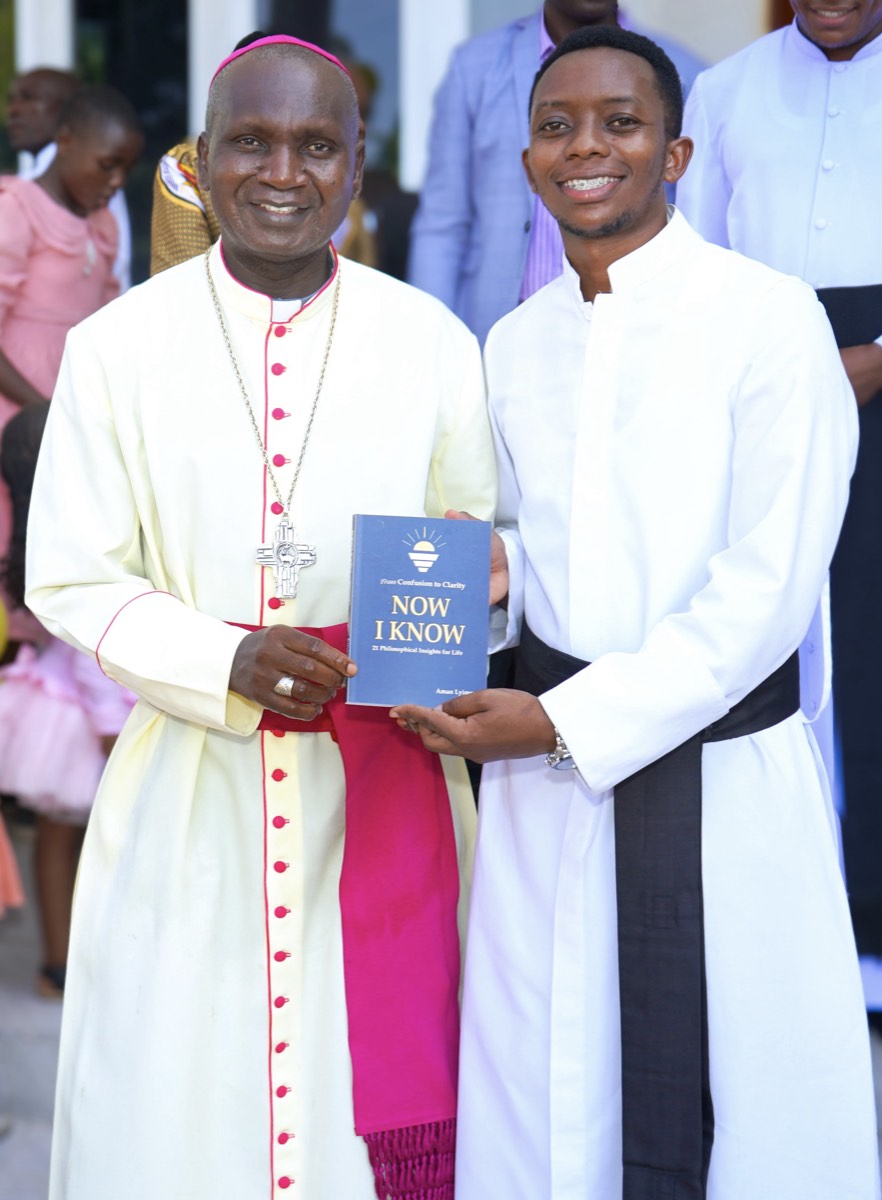
Handing a copy to the bishop, in the white cassock.
2025
The degree, and the collar
Jordan University College, Morogoro
A Bachelor's Degree in Philosophy from Urbaniana University, taken through Jordan University College in Morogoro, and a seminarian of the Archdiocese of Dar es Salaam. Theological studies come next, at the same college.
2025
The first copy goes to Prof. Tibaijuka, under the launch banner.
2025
From Confusion to Clarity launches at Msimbazi
Msimbazi Centre, Dar es Salaam
Prof. Anna Kajumulo Tibaijuka, former Executive Director of UN-HABITAT and former Minister for Lands, Housing and Human Settlements Development, launches the book as guest of honour. Fr. Denis Ngumba, Director of Vocations for the Archdiocese of Dar es Salaam, gives it his blessing, alongside Rev. Dr. Elion Kimaro of Evangelical Lutheran Church in Tanzania (E.L.C.T) Kijitonyama.
Sunday 5 October 2025
Prof. Tibaijuka speaking at the launch.
2025
Reviewed before it was printed
The cover carries one line under the title: reviewed by Prof. Anna Tibaijuka. Her note singles out chapter twelve: that a young person must know the difference between money and wealth from the outset, to break the chains of poverty and deprivation.
October 2025 · approximate
The book read at home.
2025
One month of gratitude
Socrates said no one knows everything, and yet no one knows nothing. In a world full of confusion, one subject takes up the big questions: what is real, who is God, what is man, how can we know, how should we live, what is justice. This book is for everyone struggling in silence and searching for direction.
6 November 2025
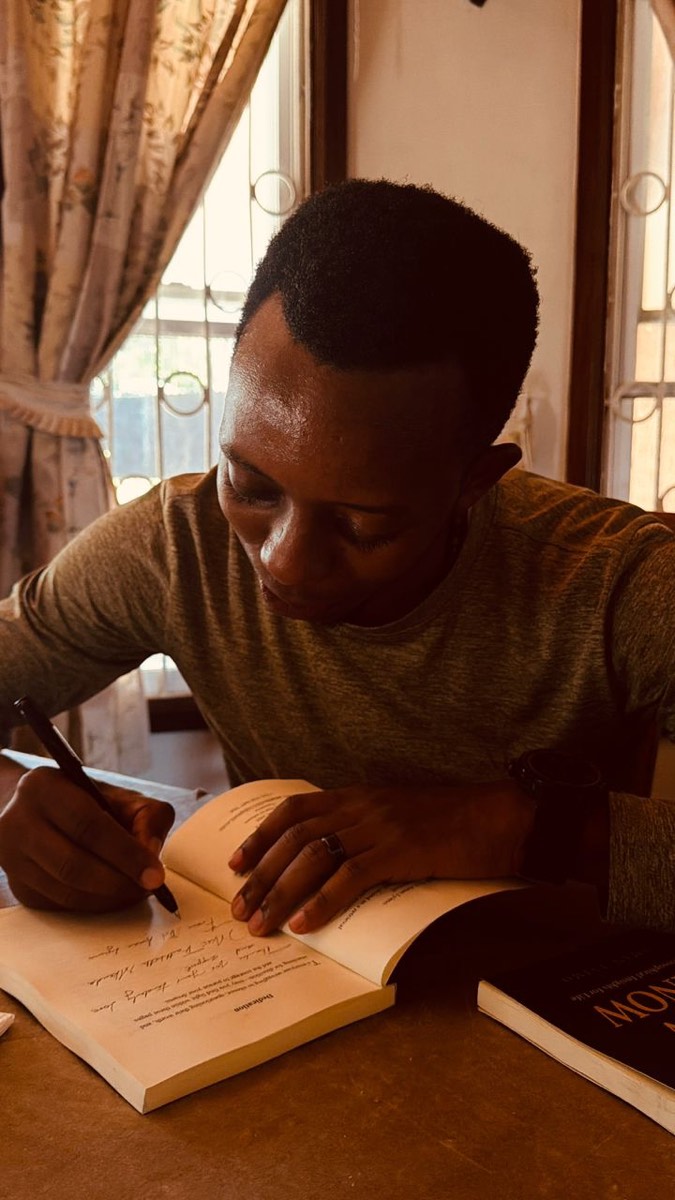
Signing a copy.
2025
Work, and then money
I start working the book in public, chapter by chapter. First a philosophy of work, that a job is identity and dignity, not just income, and that an education system training people for jobs that do not exist is not the graduate's personal failing. Then chapter twelve, on turning what little you have into wealth without betting on a miracle.
November 2025
Talking through chapter five, on resilience.
2025
Resilience, freedom, solidarity, happiness
Four more in five weeks. Chapter five on resilience, after Nietzsche. Chapter nineteen on freedom, posted on Independence Day. Chapter twenty on solidarity, after John Mbiti's I am because we are. And chapter twenty-one, on happiness, to close the book.
December 2025
A school hall at Canossa Secondary School.
2026
Into the schools
Visits before examinations at Marian Boys and St Joseph Cathedral High School: sitting with students, talking through what is actually frightening them, and encouraging them to keep going.
Through 2025 and 2026 · approximate
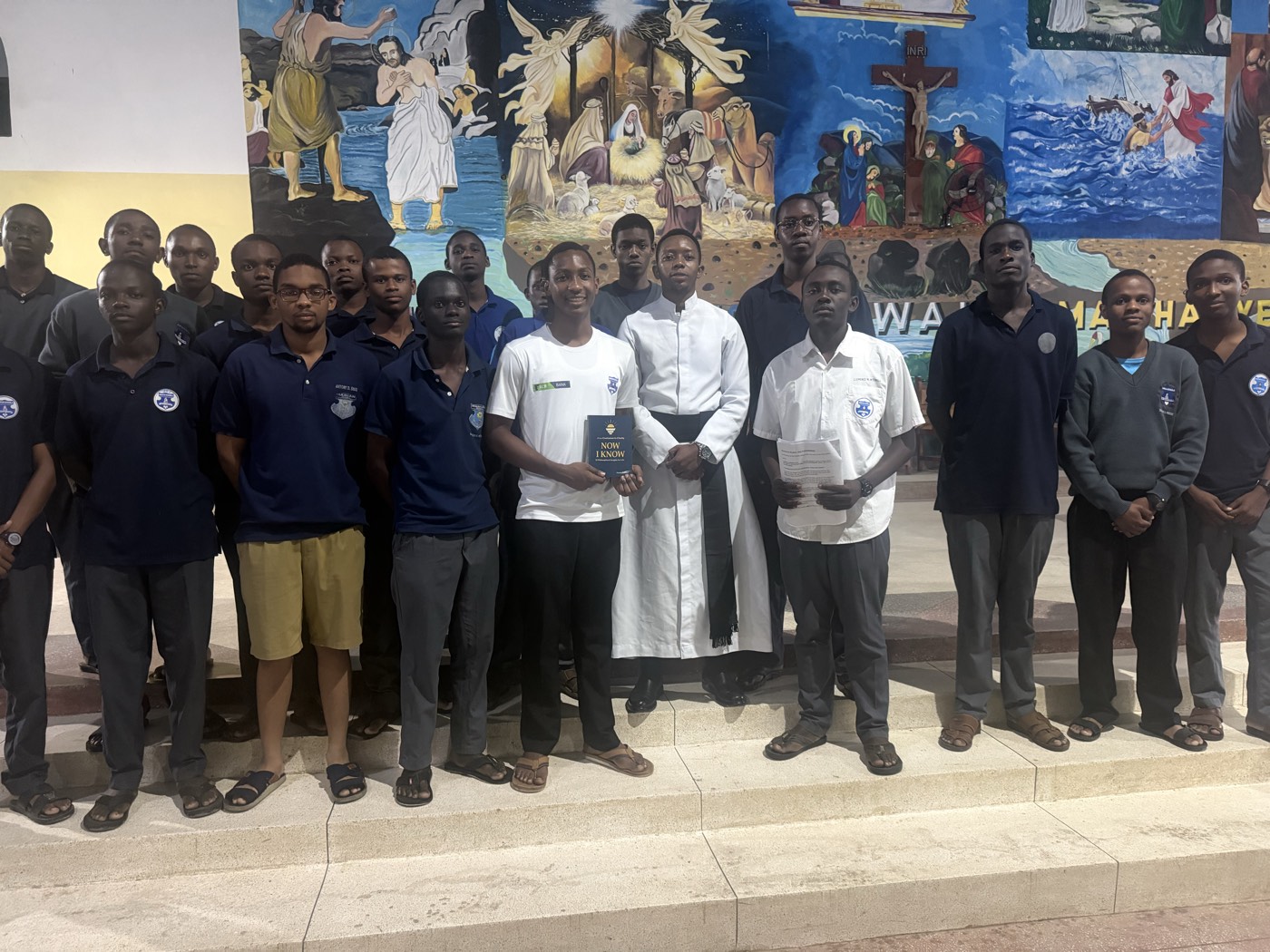
With students at the parish.
2026
And into the parishes
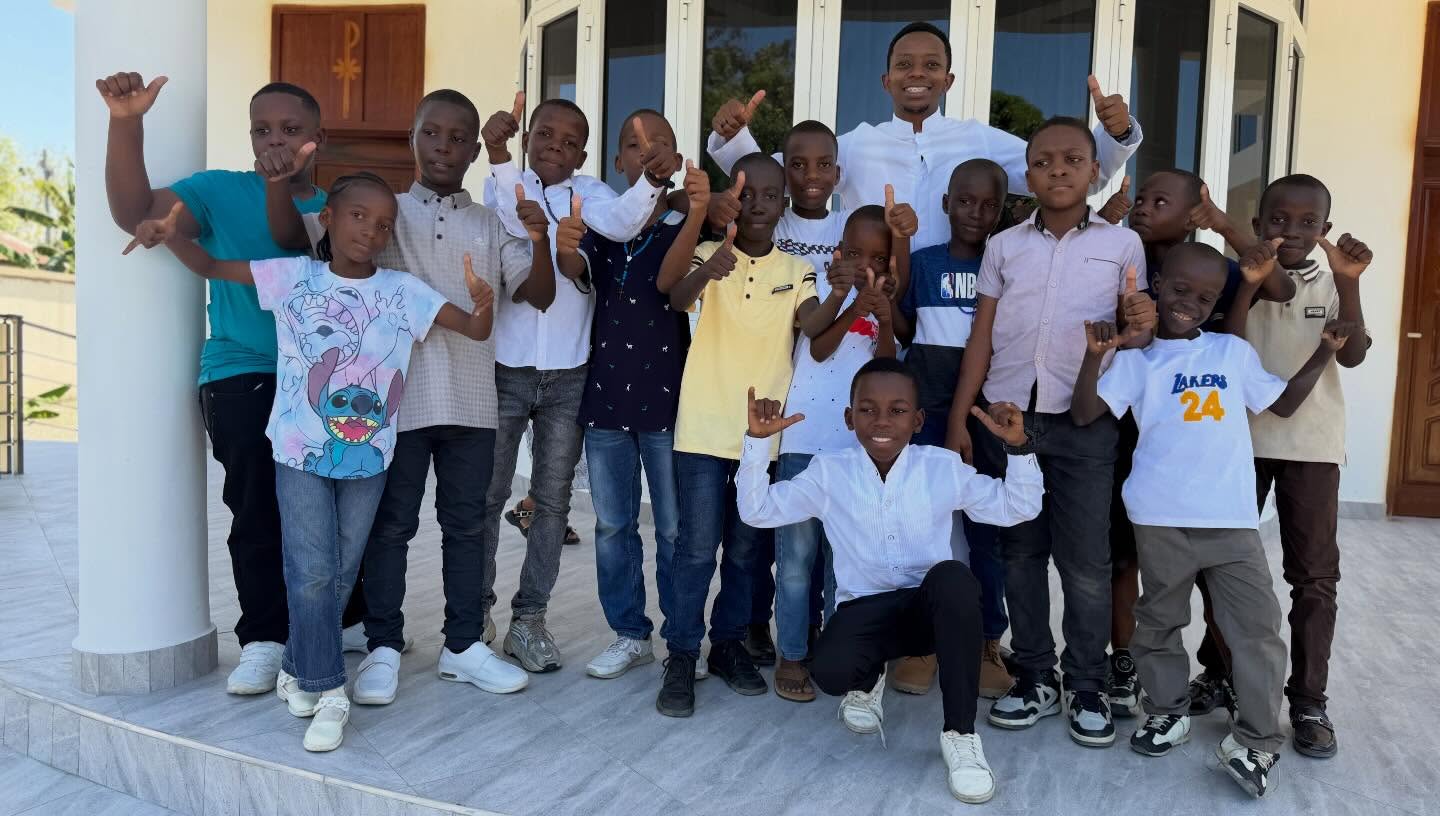
The other half of it is the parish: young people after Mass, a copy passed round, and the same conversation about what to do with a life that nobody has yet given them a philosophy for.
Through 2025 and 2026 · approximate
- 2026
2026
Bishop Mfumbusa dies
My tribute opens with an old proverb and admits it has nothing to offer: niseme nini ili iwe nini, what could I say that would change anything.
April 2026
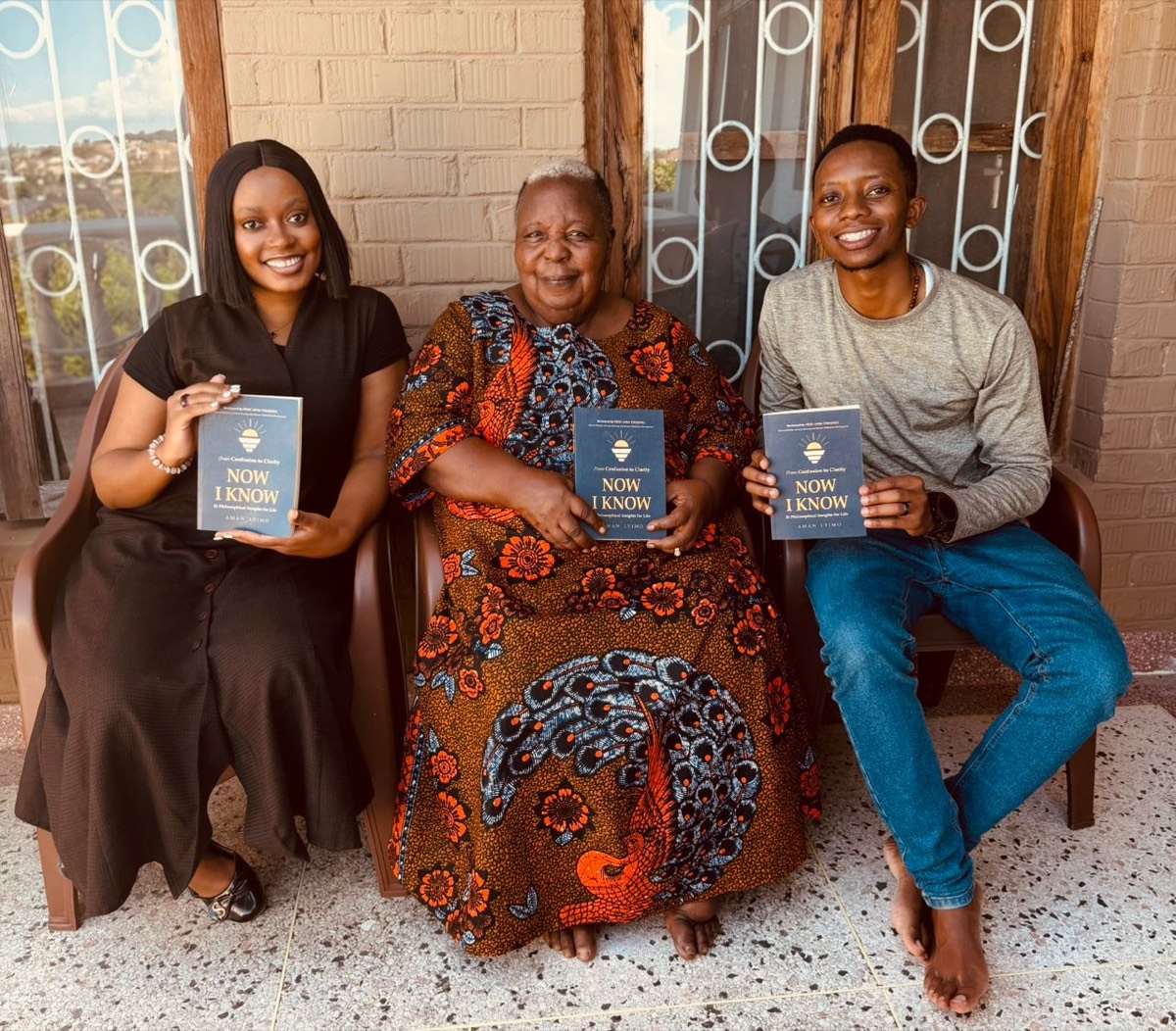
Three copies, at home.
2026
Seven months on
Miezi saba sasa. The book is on shelves at Mkuki na Nyota and St. Paulines in Dar es Salaam and Salvatorian Stationery in Morogoro, and moving through schools, parishes and WhatsApp.
May 2026
21
philosophical insights, one per chapter
2
languages, Kiswahili and English
3
bookshops carrying it
25K
shillings, the cover price
What holds it together
God’s Own
Faith is the first line of my own bio and it is not decoration. It is the frame the rest sits inside. I write about vocation as the true recognition of why I was made, and about strength coming from God rather than from human effort.
It also decides how I read a room. I go into Catholic schools and sit with students before their examinations. And when I say nobody lives alone, I am not being poetic about it: this book exists because many people carried it, and alone I could have done nothing.
WHAT I ARGUE
Build your own philosophy
Do not live other people's. A borrowed philosophy will run your life without ever asking your permission.
Know your why
The two days that matter are the day you were born and the day you find out why. Everything else is downstream.
Confusion is the enemy
Not failure, not poverty, not difficulty. Confusion. The work is to refuse it and go looking for clarity.
Work is dignity, not just income
An education system that trains people for jobs that do not exist is not a personal failing of the graduate.
Wealth has legal routes
Turning what little you have into more is possible without betting, gambling or waiting on a miracle.
Nobody lives alone
I am because we are. Solidarity is the condition under which anything gets built at all.
Want me in your room?
Parishes, school halls, youth groups, staff teams, studios. Tell me what the event is and I will come back to you.